Monday, May 25, 2009

Secret Agents

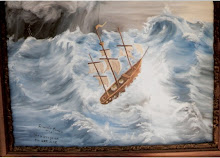
Book cover # four, Life Along the Dousinberry

Secret Agents of Deception
By Ronnie Powell
There are I’m certain millions of people who want to become established and or published writers and I am one of them. For some it appears easy, others struggle, all motivated by the desire to write stories, articles and poetry. The more education a person obtains is undoubtedly an advantage. A writer should never write about something he or she is unfamiliar with and above all enjoy the writing. Obtain the guidelines of publishers that interest you and of course there are many others aspects to follow.
I began writing when very young simply because I love to tell stories. Most of the material was cast aside or misplaced. Over the years I have enjoyed reasonable success in selling my work, writing articles, short fiction, essays and documentaries. Selling was never a priority of mine and the clutter has grown in a loft size room of my home. Writing books was and still remains a favorite pastime with five completed at present. Fiction is my favorite genre for I am a close companion to my imagination and enjoying the freedom to create a tale. Nonfiction is essential providing the populace with much needed information, but fiction is also an important diversity. I have written one nonfiction book, but have over the years dissected it to be used in short publications.
I discovered rather quickly, most publishers will not accept a manuscript without a literary agent’s representation or perhaps from an established writer of some renown. I am not sure I understand this policy unless it is to weed out the want-to-be writers or to simply be reassured the work will sell; nevertheless, it seems a bit extreme shutting all the gates even to the back forty. My first attempt at obtaining a publisher was to send out quires of which about half came back unopened and the remainder contained cold impersonal rejections. I took it on the chin and decided to look for a literary agent who hopefully would represent my work and that would prove to be a daunting task.
I went online and began looking through the seemingly endless lists of agents, researching as closely as possible to find those agency charging no reading fees or excessive service charges etc. Bear in mind these early attempts were like wandering into wolf country and I the lamb strode forward head held high, confident I would find the right literary agent.
Most agencies are I am convinced reputable groups, rejecting most of the queries that do not represent established writers. Lurking along the shadowy gauntlet are people who claim to be agents, even posting a no reading fee and other acceptable aspects. They are convincing, leading you on to believe you have at last found an outlet for your work. I was duped and it cost me in dollars and wounded pride.
I did not give up and continued searching occasionally locating an agency that appeared to be honest, but quickly learned it was just another bloodsucking scam and I stepped away. There were a couple of reputable agencies who wanted to develop the book, requesting in one instance to add colorful language and another did not want to accept my illustrations as a part of the package. I politely declined.
During the years at attempting to find an agent, I became a bit discouraged but kept writing. In the following months two magazines began publishing stories of mine, both nonfiction and fiction. I was also published in a few newspapers of which added to my writing résumé. They were narrow trails of progress leading somewhere, but slowly and then two of my ghost stories were published in a book by Joan Gilbert, an independent publisher.
I changed course, exited the meandering road through the tangle of literary agencies and set my sights on Independent Publishing. It was and still remains an exciting endeavor. My first book South Through Bare Foot Pass came out in 2006, the second Tiddleson, Son of Tiddle soon to follow. Both of these books sold well to people near and far and that was encouraging. Each book generated enough funds to publish another, leaving a modest profit. A Stranger in London Smoke, the third book was enormously popular. The fourth book, Life along the Dousinberry will be published in the near future and many have reserved a copy. The books are limited editions and will not be monumental publications in excess of a thousand or more copies and generate fortunes, but they are my stories to share with others. The stories are within enduring copies of the highest quality and are suitable for any age group
I am eternally grateful to those who have purchase these books and their loyalty. I am also grateful to those who visited this blog and left your comments. My journey to becoming a published author has been interesting and I do not intend to return to the shadowy traces where secret agents lurk to prey on dreams and honest toil. Adios

Friday, April 3, 2009

Return to Bare Foot Pass


Return to Bare Foot Pass

It has been some time since my last entry due to my computer going out and busy with my latest published book, “A Stranger in London Smoke.” The book is selling quite well. Winter is winding down and Spring, although yet timid is beginning to show itself. The Missouri Ozarks will soon be dressed in new green and trimmed with grandeur of delicate bloom. It is a wonderful time of rebirth and continuation of the unique lifeways in and along the Niangua River Basin.

Friday, December 19, 2008

An unforgetable Christmas


A Time to Remember
An Unforgettable Christmas
By Ronnie Powell
World War Two had begun taking an even more dreadful toll in human lives by autumn of 1944 and Father in anticipation of being called to arms decided the family should move to the farm they had recently purchased from Grandmother Carrie Powell. The 120 acre farm located on the south bank of the Dousinberry Creek near Long Lane, Missouri, and my birthplace would become home to me for many years to come. Father would remain in Kansas City to await the outcome of draft or not and continue working in the defense plant where he was employed at the time.
The journey to the farm began at day break on a cold November morning a couple of weeks later with Father, my twin brother Donnie and me in the cab of a snub nosed Chevy truck van. Mother, Grandmother Carrie Powell and baby Richard followed in the family car. The exit from the city to the farm nearly two hundred miles would become a grueling twelve hour drive through the one of the worst blizzards I have encountered.
Nightfall had prevailed by the time we reached the old homestead house sitting on the north face of Brushy Ridge. The two story dwelling had been left vacant since the passing of Grandfather Powell and in a state of disrepair and cloaked in a heavy blanket of snow. The front door stood opening and a covering of snow lay across the parlor floor. The structure stood without heat, lights and water. A huge potbellied stove inside was quickly loaded with dry wood from a shed out back and soon the cold began retreating from the house. It was as if the old structure awakened and began creaking and groaning from within. We all pitched in and unloaded our possessions. Extra sheets and blankets were hung over the doors and windows to keep out the wind and blowing snow.
It was imperative that Father return to the city and began the journey back alone around midnight, leaving us to fend for ourselves. I alone, at age nine considered it all a wonderful adventure, but for Mother it must have been a frightful and trying experience.
Eight days later Father returned in a borrowed automobile with much needed food supplies and a four day furlough and set about chopping stove wood, making minor repairs and installing a rope and bucket over the well. A jersey cow, named Peggy joined the family along with a few hens and a rooster. But all too soon it was again time for him to return to the city with no assurance when he would return, not even for Christmas.
The winter that year was very harsh with more snow and subzero temperatures. Money was extremely scarce added to the sparse living condition and if not for Peggy the cow we would have had to do without milk. Thanksgiving came and went a rather dismal affair. Grandmother Carrie sacrificed one of the hens for Thanksgiving dinner and the results were chicken and dumplings, biscuits and gravy.
Life went on of course and each day Donnie and I trekked off to Brushy Ridge School, with shoes wrapped in burlap wearing two heavy sweaters and socks for gloves. The old one room building stood in the center of a clearing with rather large windows down each side. A huge wood burning stove kept the room quite comfortable. I was assigned a desk near the south wall at one of the windows. Shelves on each side of the window contained the school’s entire library of about forty books. It was there I discovered Penrod and Sam, Robin Hood, Call of the Wild and a few more of the classic.
With Christmas looming closer we began wondering whether Father would come home or not. A small cedar tree was cut and erected in the parlor and decorated with tinsel and a few ornaments. Grandmother Carrie assured us there would be gifts under the tree when Christmas Morning arrived.
The view from the house to Dousinberry Creek extended to well over a mile and I sat by a window on Christmas Eve watching the road in anticipation of seeing Father cross the bridge. Time wore on and by late afternoon I had all but given up on him returning for the event and then I caught the sun glinting off the windshield of an automobile as it approached the bridge and I yelled for in my heart I knew it was Father. A few moments later the vehicle pulled into the driveway and he stepped out, a returning hero to me.
I rushed outside well ahead of everyone. He began handing us wonderful things. A ham for Christmas dinner, store bought bread and a huge bag of candy were among the items. I managed a quick look inside the car, saw no wrapped gifts, but wasn’t too disappointed, for after all Father was there at last to share the holiday with us.
The aroma of Ham baking in the oven awakened my brothers and me the next morning. I was certain there would at least be few gifts under the tree and I hurried down stairs. To my surprise I saw three distinct separate piles of gifts lying under the tree and upon closer scrutiny found one pile bearing my name.
I waited impatiently while the family gathered around, sitting beside the pile of gifts. When the word was given to open the packages I began with up most urgency. First to be opened was a bundle of assorted colors of construction paper. The next package a gift from Grandmother consisted of a brightly colored toy celluloid car. The last gift a very large one wrapped in heavy brown paper intrigued me the most. What I saw when the last of the wrapping was tore away took my breath, for lying there on the floor was a red mackinaw coat, matching stocking cap, mittens and rubber galoshes.
I quickly donned the garments and went out on the front porch and sat down. It was very cold but I sat there truly warm inside and out on that wonderful Christmas morning. Adios.

Saturday, November 22, 2008

An Endangered Bug


A Time to Remember
An Endangered Bug
By Ronnie Powell
The bug I am referring to is not a rhinoceros beetle, a doodle bug, a cockroach or any of the many natural bug species inhabiting the Earth. This Bug has however, infested nearly every corner of the Earth, been subjected to just about every form of abuse imaginable. Swarms of them spread rapidly into society capturing the imagination of millions of people. As they began to evolve in many variations and sizes and quite rapidly I must say, these bugs began appearing in every color of the rainbow and adapting to just about every climate and land condition.
They could not be stopped, or so it seemed. In the late 1970’s new Volkswagen Bugs began dwindling in numbers across the world, however, Mexico became an ideal haven for this phenomenon but less than fifty years later the last breeding ground of this unusual bug has been eliminated.
The Kdf-Wagon or “Strength- Through Joy Car, would later become known as The Volkswagen Beetle and much later the Volkswagen Bug. It was not until the Nazi regime lay in ruins and the reconstruction of Germany began that watchful mass production of the legendary Volkswagen began under the close supervision of the U.S. and British occupation that ultimately would create a most remarkable invasion of little cars around the world.
Adolph Hitler’s return to the Nazis party in January of 1933 marks the conception of o the Volkswagen Beetle, although yet in it’s true form. The kubelwagen, (bucket car): and the Schwimmwagen, war time versions of the VW were manufactured for a power bent on the destruction of the world.
Fast forward and the Volkswagen Beetle eventually became an icon of efficiency on the road, although a bit small for most families. Quite agile in the mountains, deserts and a general all around vehicle, however, the early models were noisy, the suspension bad and the life of the engine relatively short. By the 1950’s Volkswagen Beetles were performing much better, a distinctive and strangely beautiful car and in the ensuing years Volkswagen became a part of a diverse U.S. culture.
It is general knowledge that America embraced the little sedan; willing consumers from every walk of life drove the Volkswagen Bug. The Hippie’s of the 1960’s adopted the car creating many unusual versions of it. Surfers and racing people created the Baja VW. The little care was customized in many ways, for example, the tires widened, the hood replaced with replica hoods of famous cars. In some instances front engines appeared. These VWs were fast and more often dangerous to drive. But for the most part this simple little car designed to satisfy a basic consumer’s need and desire to express oneself became an unforgettable unpretentious machine.
Most memorable of all are the memories attached to individual Volkswagens. One particular 1966 Volkswagen of which I owned for a time was unceremoniously shoved into the Niangua River one evening by its previous owner expecting it to float. It was widely rumored that the Volkswagen bug would float a considerable distance and I suppose a few would, but this one did not and sank like a rock. Later after being dried out and the motor rebuilt, it again was ready for the road, serving me faithfully for a number of years through snow packed roads, wooded trails and the open highway.
A much newer yellow 1972, Super Beetle came into my possession equipped with an automatic transmission. It was a beautiful car as sleek as any on the road, a real eye catcher. I drove it to Lamar, Missouri to attend a craft fair show to try and sell my woodcarvings. Heavy rain dogged me the entire trip and when night came the rain continued. Sometime along toward morning I awakened and went to the door of my motel room. The parking lot and all around lay under at least a foot of water. The Volkswagen sat near the door, water slapping at the running boards. I hurriedly dressed and with suitcase in hand went out the door to find the car floating about eight feet away. I wasted no time, and foolishly got in the car and drove onto the street. The gallant little bug spun its tires spewing water from beneath the rear end as we headed to higher ground. The engine sputtered several times during our precarious escape up a hill and came to halt on safe ground. The flooding in Lamar was devastating and it took nearly ten hours for me to get out on the road home, thanks to the Volkswagen.
The Volkswagen may have started out with sinister intent, but when reaching America it became a wonderful conveyance with soul. Herbie will attest to that.

Friday, November 14, 2008

Secrets of McKee Ridge


A Time to Remember
Secrets of McKee Ridge
By Ronnie Powell
There is a portion of the Niangua River basin where mysteries of the past abound in the many deep hollows, canyons and lofty bluffs. This intriguing aspect of the river is but a small area of the basin that guides the reckless river to its submission into the Lake of the Ozarks of Missouri.
The journey down McKee Ridge and adjoining land would take more than ten years for me to complete across centuries, along forgotten trails leading to the remnants of an ancient people who once inhabited the Missouri Ozarks along the Niangua River. Lying beneath the dust of overhangs and caves, in the tangle of vines and roots and hidden in thick underbrush are artifacts and burials of distant cultures including those of white settlers. The journey was not an easy one, often fraught with danger, grueling climbs and cold nights in secluded caves and deep hollow retreats.
The Cowan Ridge abruptly ends at or a short distance below the Windyville Bridge and McKee Ridge begins its majestic rise above the river. Barren faces of limestone bluffs tower above the river. Weathered by millenniums of time, creased and broken by nature’s relentless forces, these bluffs are timeless sentries and keepers of many secrets of the dead. Some are forbidden places and will remain so as far as I’m concerned. They are thresholds, sacred reminders of man’s obsession to preserve the dead or for illicit reasons to destroy all presence of a life.
In many of the caves and overhangs situated along McKee Ridge and I will not reveal the location of these caves. I discovered quite easily artifact from the earliest civilization to the present. Earthen pottery shards possibly dating back ten thousand years, chert arrow points, knives, hammer stones and many other tools representing Prehistory Indians. Bone beads, awls, needles, mussel shell ornaments and effigy creations were relative common in most of the old shelter sites. Human burials were also evident representing a wide range of life ways from the very earliest to the declining years of the 1800s.
Remnants of whiskey stills were noted and in one small overhang where I discovered a seven shot revolver frozen in rust along with an assortment of stoneware shards, representing bowls, cups and a jug. Two metal straps were noted, a Santa Fe Railroad key and a portion of a bridle rein. A metal ring protrudes from the east wall of the shelter and below a horseshoe was noted along with several horseshoe nails. One can only imagine what transpired there in that secluded part of the bluff.
Near a steep slope below a small cave that has suffered a major collapse and extensive erosion over the years I explored a long trail of eroded gravel and stone, locating Indian artifact and an assortment of skeletal remains. The debris field also contained evidence of later occupation and or perhaps a burial. The brass trim from a rifle was located about half way down the slope along with the rusted remains of a flintlock weapon.
I found when entering the cave small pools of water fed by surface runoff from the ceiling. Red clay mud covered most of the floor area except for a high point near the south wall and it contained several small to medium stones. The lower end of this area had also been inundated by the erosion and revealed about four inches of a gun barrel. I removed most of the stones and exposed the rest of the barrel. The barrel measured roughly thirty inches in length and I believe it to be a smooth bore. Two lead balls were also excavated of a about sixty or seventy caliber each.
At the upper side of the excavation several pieces of badly decomposed bones were noted, one distinct piece belonging to the lower jaw of a human. Two brass buttons were recognized but due to extreme decomposition were little more than blobs of green. The fate of this individual will remain a secret of McKee Ridge. One can only speculate or wonder. Was he a Spanish Conquistador or an early trapper living among the Indians?
Many other small caves and rock shelters were visited and all contained evidence of occupation whether by Indians or white immigrants. Some of these sites had been dug out leaving them barren. McKee Cave has long since been ravaged by pot hunters and bears little resemblance to the time of the Indians.
In a deep hollow or more correct a small canyon that flows into the Niangua River I located a spring of sweet water, where ferns grew in abundance. A small cave is situated above the spring and is completely dry, an ideal shelter. Inside this compact enclosure were obvious signs of human habitation, flint or chert flakes were noted along the walls and earthen potshards were abundant. Near the center of the enclosure, close to the small entrance I probed the soft dry earth and found charred turkey and deer bones and an incomplete arrow point. I did not intrude further into this pristine treasure.
The journey to distant horizons was not without danger. A fall while climbing up a bluff sent me tumbling down a rocky slope and if not for an oak tree, I might not have survived. The fall was not with out consequences, resulting in cuts, bruises and a minor injury to my lower back.
One day while climbing a bluff to get a better view of an opening high above me, I arrived at a ledge and proceeded to pull myself up and came face to face with one of the largest black snakes I have encountered. Eye to eye we were and with out warning the reptile struck, hitting me in the left cheek with tremendous force. I lost my handhold and fell a few feet down the slope with the black snake tumbling down with me. Neither of us was seriously injured except for our pride. I have faced swarms of red wasps, a very large buzzard that had been wing shot and in no mood to face another human drove me from its cave refuge. A female bobcat with young forced me to retreat rather quickly from a cave and skunks were often a reason to abandon a rock shelter. I have encountered Copperhead snakes usually timid, but also can be quite unforgiving, striking with deadly intent.
I did not reach a point of origin in that distant horizon I sought, for to have done so no longer would I dream. The trails lead back into the shroud of time and will always hold insurmountable secrets. I began my journey in 1945 after unearthing a stone knife and little did I realize I would someday stand where no man of my kind has stood before to stir the ashes of forgotten fires that once held back the dangers of a wilderness night.
My journey to distant horizons ended many years later when I climbed to the summit of a Mayan Pyramid of the Sun in old Mexico. I stood gazing at the far mountains from where the Spanish came, listening to an old man playing a clay flute, perhaps reminiscent of an earlier time and glimpsed the reflection of Spanish armor in the distant hills. Adios

Friday, October 24, 2008

The Intruder


A Time to Remember
The intruder
By Ronnie Powell
During the summer of 1967, Father, stricken with Parkinson disease had become bedfast, totally dependent on Mother. Nearly every evening my wife, the children and I arrived at the old farmhouse to help in any way we could. Mother distraught by the added burden of caring for Father, and him despondent by the terrible affliction welcomed our presence, especially the children.
The farm or so it appeared to me huddled without purpose around the old house. The pastures and fields deserted; the milk barn dark and dusty. The flowers Mother had taken great pride in drooped as if resigned to an untimely end. The farm had become a lonely place and even the Whippoorwill that came each night to sit in a high branch of the oak tree outside the kitchen window calling, sounded especially forlorn. A dreadful reality had befallen this place of memories. It was not a good time for any of us.
Mother informed me a few weeks earlier that someone was sneaking around at night pilfering through the outbuildings including the cellar taking things, tools, jars of canned goods and perhaps even other items she was not aware of. She of course was angry, but worse frightened that the intruder or intruders might break into the house. She did not inform Father of the situation, but he knew, I could sense it, but no longer able to communicate clearly he said nothing. There was little the law could do, short of remaining at the farm every night.
One evening near midsummer as usual the family and I arrived and took up our watch, helping Mother and sitting around visiting. I went to the bedroom where Father, lay propped up on pillows, talking to him and trying to understand his replies. The evening had faded into night. The mercury vapor light mounted on a pole above the garage below the house awakened with a soft glow pushing aside a bit of the darkness.
Sometime later, Joyce quietly informed me that she and mother had heard what sounded like a car door shutting somewhere near the house. Each of us cautiously peered out a window trying to locate the sound, but to no avail.
Mother was understandably upset and since my parents had no phone, I decided to have a look outside. I left the house under protest from Mother and walked as nonchalantly as I could down a short path to the garage where our Chevy sat near the yard light. I saw nothing amiss, but entertained a feeling that I was being watched and decided to go to the Chevy where on the front seat I had left a revolver. It lay where I had placed it, glinting dully in the shadowed light. I quickly took possession of the firearm, carrying it loosely, dangling from my right hand. Reasonably certain there was nothing to be concerned about I started back up the path toward the house.
I was wrong.
I cannot say what prompted me to look into the garage where my parents Ford set; perhaps it was instinct, a detached primeval force inherent in all creatures. Standing there half in shadow and light I saw a man, staring intently at me. I will never forget the eyes, wide with fear, in a face pale and drawn. He suddenly moved out into the light, bringing up his right hand rather quickly appearing to be holding a long barrel, nickel plated handgun. Mere seconds passed and I don’t remember bringing up the revolver I held in my hand, firing it once, but I heard the loud report and the bullet’s impact hitting the fellow. He screamed like no other person I have ever heard before, clutching his left side, dropping the object he’d held in his hand, ( a long, nickel plated screw driver) and ran, still screaming, hitting a barbed wire fence, catapulting over it.
Mother and Joyce had stepped out of the house onto the porch. Mother screamed, a piercing sound reverberating against the night. I stood in stunned silence listening to the rapid footsteps of the intruder and then heard the sound of an automobile speeding away.
The Sheriff at the time said only that I had been justified in firing my weapon and the incident ended there. The intruder remained unknown along with the severity of the man’s wound.
It was not that I lay awake during the following nights, guilt ridden by what I had down, but the memory of the man’s eyes and face and sound of him screaming haunt me even today. I concluded he wanted only to escape and did not intend to hurt me, but the price he paid for being a thief, surely haunts him as well, if indeed he is still alive. Adios

Tuesday, October 21, 2008

California?

California?
I heard an old man ask another one day. “Why is everyone going to California? They never write to let me know what’s going on. The farm is growing up in weeds, the fences are down and I don’t see so good no more. Tell me if you can, what’s out there?
Why is everyone going to California?